
A new consumer unit can be one of the most visible electrical upgrades you make to an older home. But for me, replacing the box itself is only part of the job.
A recent consumer unit upgrade on Cunningham Road in Burnham-on-Sea demonstrated exactly why I carry out electrical testing before replacing an old fuse box.
The homeowner had an older, outdated fuse box that was due to be upgraded. During my initial testing, however, I discovered something elsewhere in the installation that needed dealing with first.
An unexpected fault under the stairs
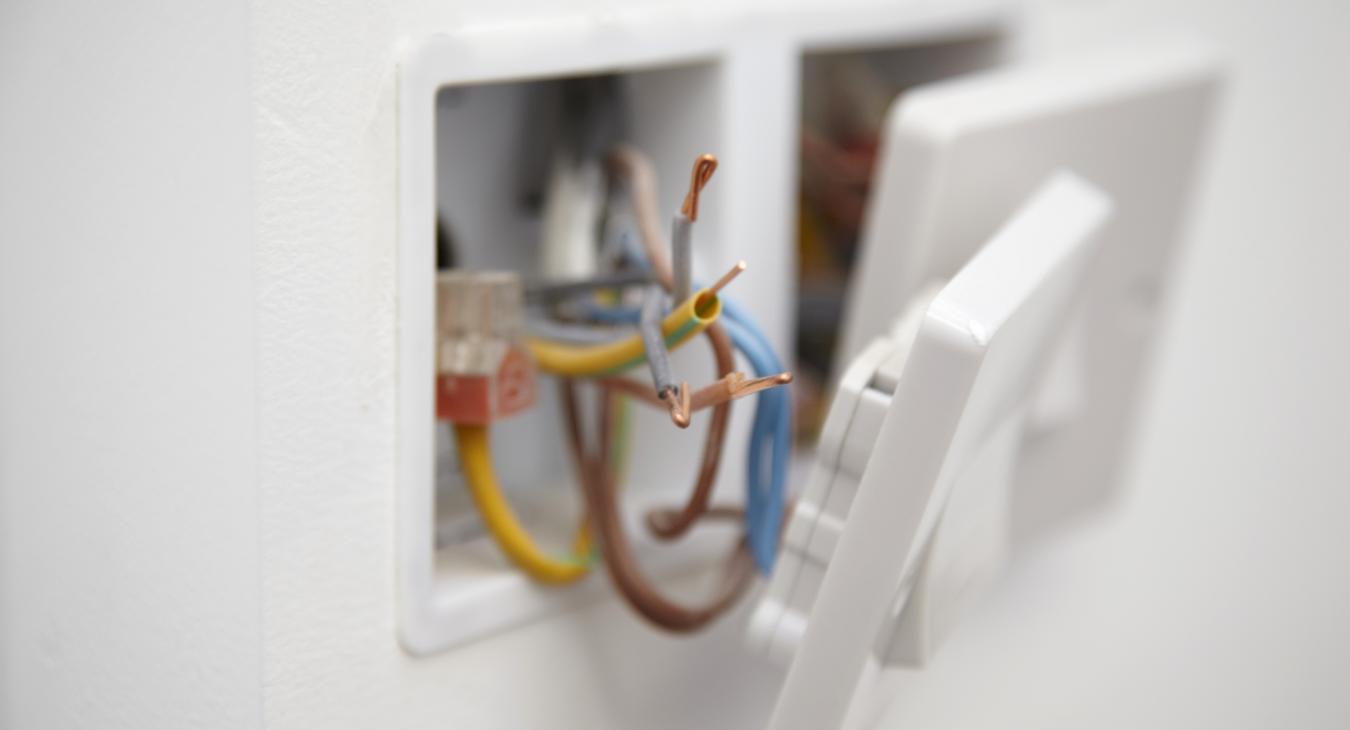
There was a light under the stairs in the lounge which appeared to have been added as a DIY installation.
When I investigated it, I found the neutral and earth conductors had been twisted together.
That's not something I would simply ignore and continue with the consumer-unit change.
The customer didn't need the light, so after discussing what I'd found and getting their agreement, I removed the unwanted fitting and made the wiring safe.
Only then did I proceed with the planned upgrade.
Why can an old installation appear to work despite a fault?
This is something homeowners understandably find confusing.
If the lights come on and the sockets work, surely the wiring must be all right?
Unfortunately, that's not necessarily the case.
An electrical installation can contain inappropriate alterations or wiring faults without producing an obvious everyday symptom. Changing the protective devices can then expose problems that weren't apparent beforehand.
On this job I was installing a modern consumer unit with individual RCBO protection.
The incorrectly connected neutral and earth at the unwanted light would have caused problems once that protection was introduced.
Finding it before changing the consumer unit meant I could investigate and rectify the issue properly rather than fitting the new board and then wondering why a circuit wouldn't operate correctly.
What is an RCBO consumer unit?
An RCBO combines overcurrent protection with residual-current protection for an individual circuit.
One useful feature of an all-RCBO arrangement is that circuits have their own protection rather than several circuits sharing one RCD.
So, for example, a fault affecting one protected circuit doesn't necessarily remove power from a whole group of unrelated circuits in the way some older arrangements can.
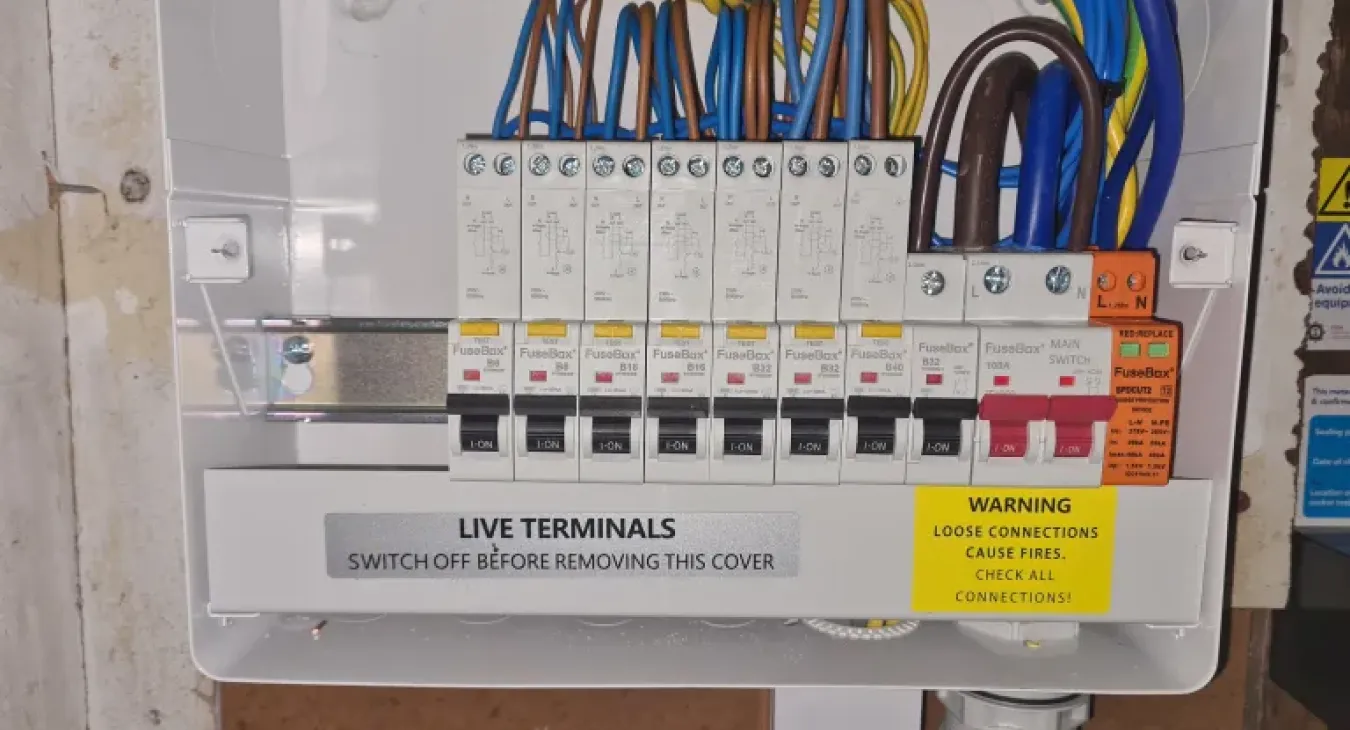
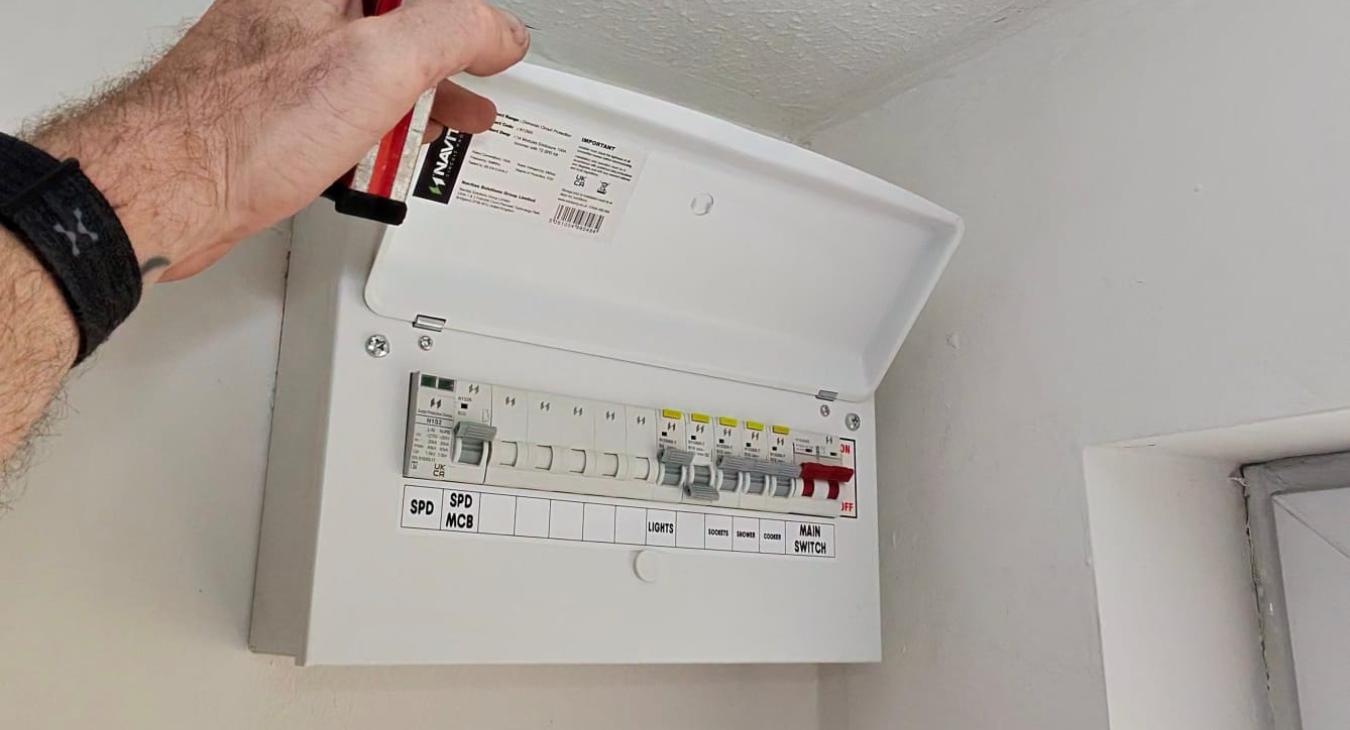
For this Burnham-on-Sea property, I replaced the old fuse box with a modern RCBO consumer unit incorporating surge protection (SPD).
What does surge protection do?
The new consumer unit also included a surge protective device, commonly abbreviated to SPD.
An SPD is intended to limit transient overvoltages that could otherwise damage electrical and electronic equipment.
Modern homes contain far more electronics than they once did — televisions, computers, appliances, heating controls and numerous other electronic devices — so surge protection has become an increasingly relevant part of modern electrical installations.
It doesn't make equipment indestructible, but it forms part of the protective measures within the installation.
Why I test before changing a consumer unit
This job illustrates an important point about consumer-unit replacements.
I don't want to find out about an existing problem after I've removed the old fuse box.
Testing beforehand gives me information about the condition of the circuits I'm about to connect to the new equipment.
If something unexpected appears, I can investigate it, explain it to the homeowner and determine what needs to happen before proceeding.
Sometimes that means finding issues that nobody knew existed.
The under-stairs light on Cunningham Road is a perfect example. The homeowner hadn't called me because of that light — I found the problem while carrying out the checks associated with an entirely different job.
A new consumer unit doesn't repair the wiring in your house
This distinction is worth making.
Installing a modern consumer unit can significantly improve the protective arrangements at the origin of an installation, but the new consumer unit doesn't magically correct defects elsewhere in the property.
The circuits connected to it still need to be suitable.
That's why I think homeowners should be cautious about comparing consumer-unit quotations purely on the price of the box and the time somebody expects to spend fitting it.
The important question isn't simply:
“How much is a new fuse box?”
It's also:
“What checks are being carried out on the existing installation before the new one is connected?”
The finished Burnham-on-Sea installation
Once I'd dealt with the unwanted DIY light and made the wiring safe, I could complete the planned consumer-unit replacement.
The old fuse box was replaced with a modern RCBO consumer unit with surge protection, and the completed work was inspected, tested and certified.
Most importantly, the homeowner didn't just end up with a smart-looking new consumer unit.
They also knew that an inappropriate alteration elsewhere in their electrical installation had been discovered and dealt with as part of doing the job properly.
The customer was very happy with the completed work.
Thinking about replacing an old fuse box in Burnham-on-Sea?
If you have an older fuse box and are considering upgrading it, it's worth remembering that the condition of the existing circuits matters just as much as the new consumer unit itself.
I carry out consumer-unit upgrades and domestic electrical testing in Burnham-onSea, Highbridge and surrounding areas of Somerset through D Durnan Electrical Ltd.
I'm NAPIT registered, and my approach to consumer-unit replacements includes assessing and testing the existing installation rather than treating the work as simply swapping one box for another.
For a free, no-obligation quotation, call 01278 783 668.