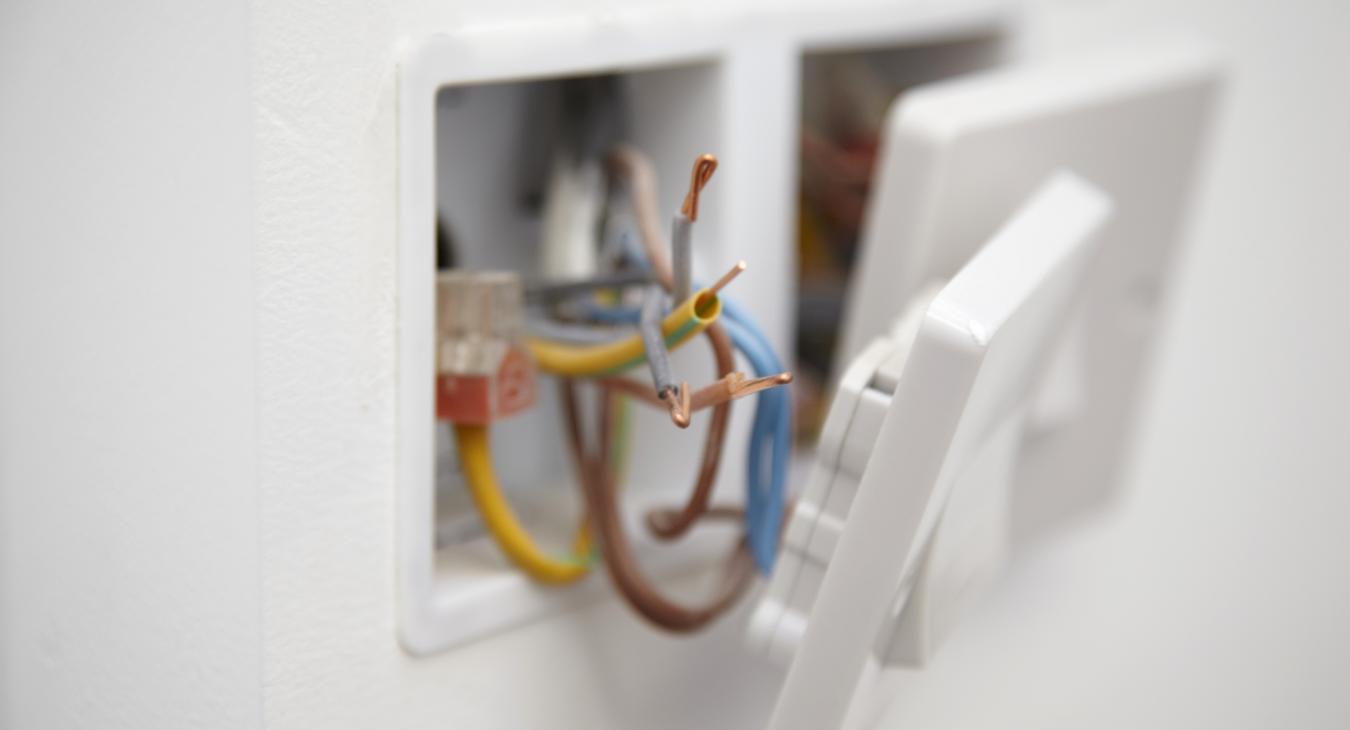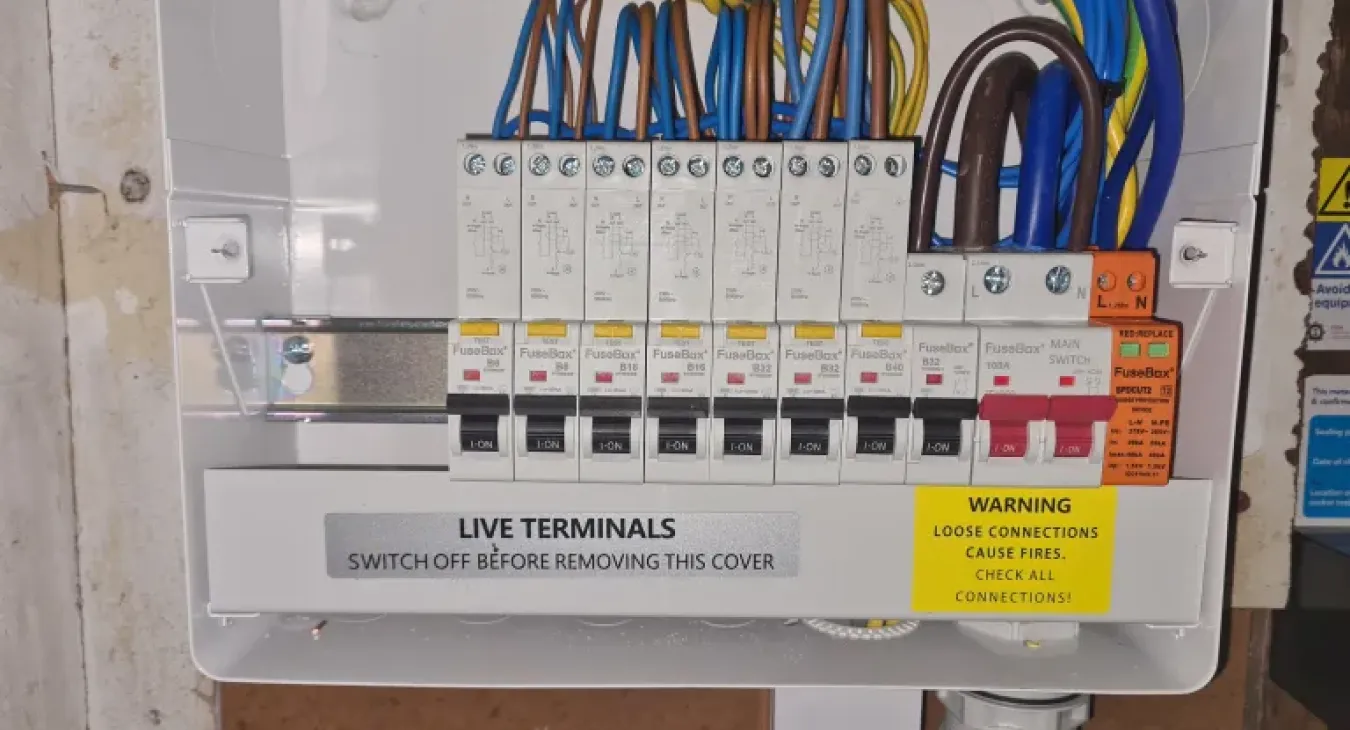

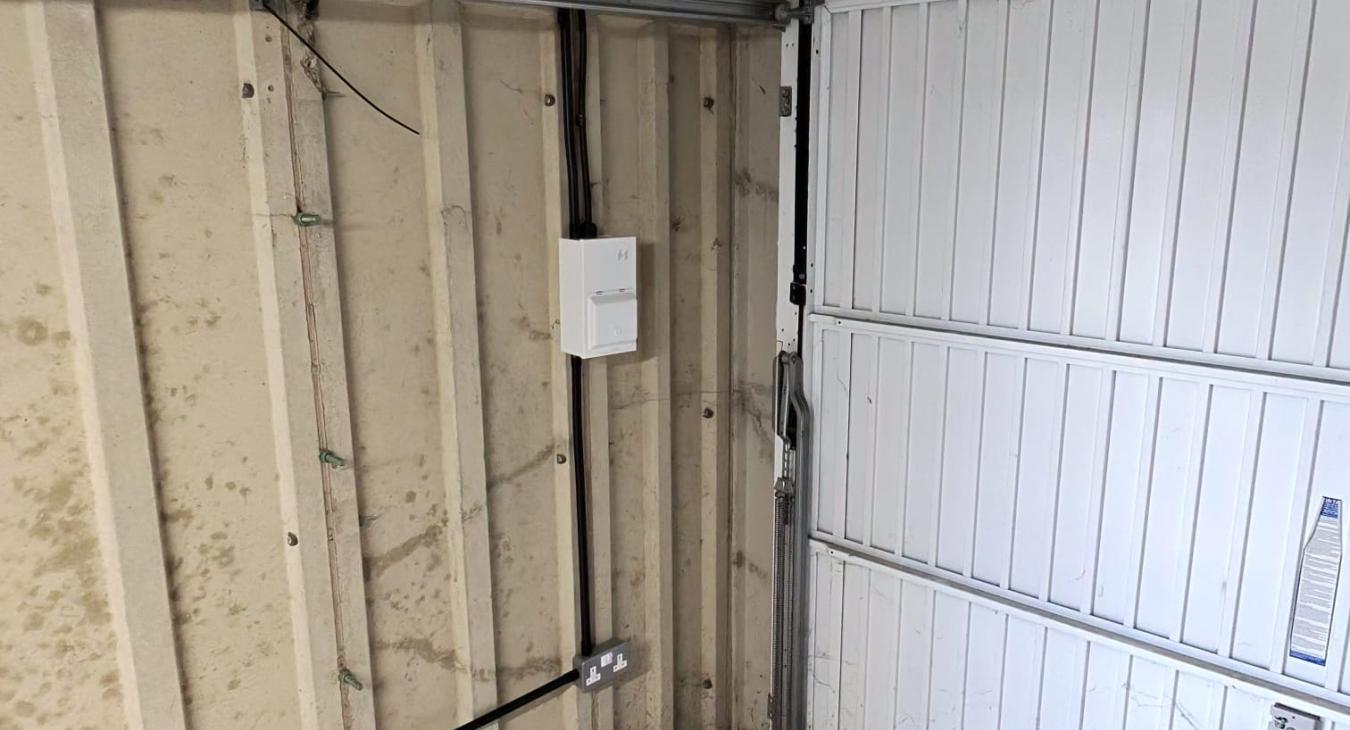
Adding electricity to a garage can sound straightforward: run a new supply, install some sockets and lights, and connect everything up.
In reality, the cable route can sometimes be the most challenging part of the job.
I recently completed a garage electrical installation in Bridgwater where the garage had no electricity at all. The homeowner wanted to turn it into a much more useful space with proper lighting, socket outlets and its own consumer unit.
The difficulty was getting a suitable electrical supply from the house to the garage without causing unnecessary disruption.
The challenge: getting power to the garage
When I assessed the property, one option would have been to install the new supply underground.
The problem was the route between the house and garage. Taking the cable underground would have meant digging up the existing path, adding considerably more disruption to what should otherwise have been a relatively straightforward installation.
Before carrying out work like this, I look at the property and consider the available routes rather than automatically choosing the most obvious one.
In this case, there was another practical solution.
Supporting the garage supply over the gate
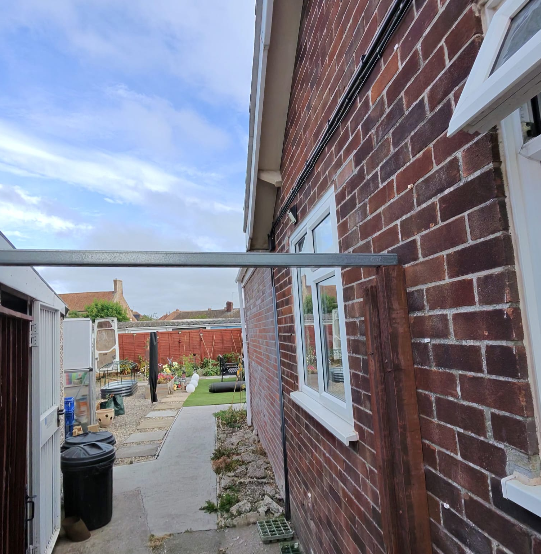
I decided to take the supply across the gateway and installed Unistrut above the gate to provide a secure support for the cable.
This gave me a strong, defined cable route between the buildings without excavating the customer's path.
It also meant the cable wasn't simply left unsupported across the opening. Providing suitable support was an important part of creating a robust installation and reducing the risk of premature collapse.
For the homeowner, the biggest advantage was simple: we could get a proper electrical supply into the garage without digging up their path.
Installing the garage electrics
Once the supply route had been resolved, I could turn my attention to making the garage genuinely useful.
I installed:
- A small garage consumer unit
- New socket outlets
- New garage lighting
- The new supply and associated cable support
The result was quite a transformation considering that, before the work started, there wasn't any electricity in the garage at all.
Rather than relying on extension leads from the house, the homeowner now has permanent lighting and conveniently positioned sockets supplied as part of a proper electrical installation.
Why I don't recommend relying on extension leads
It's quite common to see garages and sheds being powered temporarily from an extension lead.
That's very different from designing a permanent electrical installation for an outbuilding.
When installing a permanent garage supply, an electrician can consider the expected load, cable size and route, protective devices, earthing arrangements and the condition of the existing installation supplying it.
The completed electrical work can then be inspected, tested and appropriately certified.
That's why I'd always recommend having a garage or outbuilding supply properly assessed rather than treating an extension lead as a permanent solution.
Can electricity be installed in any garage?
In most cases there will be a way of getting power to a garage, workshop or other outbuilding, but the best method varies considerably between properties.
An underground SWA cable may be the most appropriate solution at one house.
At another property, the building layout may allow a different cable route that avoids unnecessary excavation.
That's exactly what happened on this Bridgwater installation.
The important part isn't simply choosing the easiest cable route. It's assessing the property and designing an installation that is safe, practical and appropriate for the environment.
What should you consider before adding power to a garage?
If you're thinking about having electricity installed in your garage, it's worth considering what you may eventually use the space for rather than only thinking about what you need today.
For example, you might initially only want a light and one socket but later decide to use the garage as a workshop, install additional equipment or regularly charge power tools.
Discussing those plans with your electrician beforehand can help make sure the installation is designed appropriately from the outset.
The condition and capacity of the electrical installation in the main house also needs to be considered before adding a new supply.
A practical solution for this Bridgwater homeowner
This was a relatively small electrical installation, but it's a good example of why visiting the property and assessing the job properly matters.
The homeowner started with a garage that had no electricity whatsoever.
By the end of the job, they had lighting, sockets and a dedicated garage consumer unit, with the supply taken securely across the gateway using a purpose-built Unistrut support.
Most importantly, we achieved it without unnecessarily digging up the existing path.
That's the sort of practical problem-solving I regularly encounter carrying out domestic electrical work around Somerset.
Need electricity installed in a garage or outbuilding in Bridgwater?
If you have a garage, shed, workshop or other outbuilding that needs a new electrical supply, I can assess the property and talk you through the available options. D Durnan Electrical Ltd is a NAPIT registered electrician carrying out domestic electrical work in Bridgwater, Burnham-on-Sea, Highbridge and surrounding areas of Somerset. For a free, no-obligation quotation, call 01278 783 668.